Picture this: you’re standing in a cramped kitchen, the clock ticking, and a craving for something light yet utterly satisfying gnawing at your thoughts. I’ve been chasing that exact craving for weeks, flipping through cookbooks, scrolling through Instagram, and even trying a few questionable cod recipes that left me staring at a gray, soggy fillet. The moment I stumbled upon this Mediterranean Baked Cod, I felt a surge of triumph—like finding a hidden gem in a sea of culinary mediocrity.
When the fillets hit the oven, the aroma that unfurled was a heady blend of citrus, garlic, and oregano—an olfactory promise of the bright, tangy finish that follows. I could hear the gentle sizzle as the olive oil kissed the surface, a sound that feels like a whisper of “good things are about to happen.” The visual is a kaleidoscope of ruby cherry tomatoes, glossy olives, and a scattering of capers that glint like tiny jewels against the golden crust.
What makes this version stand out isn’t just the ingredients; it’s the way each element interacts to create a symphony of flavors. The cod stays moist, the tomatoes burst into a sweet, acidic sauce, and the olives bring a briny depth that lifts the dish from ordinary to extraordinary. If you’ve ever settled for a bland fish dinner, this recipe will be the turning point that makes you rethink how simple ingredients can be transformed.
And here’s the kicker: the technique that gives this dish its signature texture involves a quick sear before the baking stage. It sounds simple, but that sear locks in moisture, creates a delicate crust, and gives the fillets a satisfying bite that shatters like thin ice. Trust me, you’ll want to taste this and not go back for seconds—though I’ll be honest, I ate half the batch before anyone else could even touch the plate.
Let me walk you through every single step—by the end, you’ll wonder how you ever made it any other way. The journey from raw cod to a Mediterranean masterpiece is a series of intentional choices, each one designed to elevate the flavor profile while keeping the process straightforward. So grab your apron, and let’s dive into the heart of this dish.
What Makes This Version Stand Out
- Flavor: The combination of lemon, garlic, and oregano delivers a bright, herbal punch that cuts through the richness of the cod. Each bite is a burst of citrusy freshness that keeps the palate engaged. The balance between the salty olives and sweet tomatoes creates a layered taste experience.
- Texture: A quick sear followed by gentle baking results in a flaky interior and a slightly crisp exterior. The tomatoes soften into a silky sauce, while the olives add a pleasant chew. The capers provide a subtle snap that contrasts beautifully with the fish.
- Simplicity: With just a handful of pantry staples, you can create a gourmet dish in under half an hour. No elaborate marinades, no complex techniques—just clean, honest cooking. The recipe is ideal for busy weeknights and for those who appreciate efficiency.
- Uniqueness: The inclusion of Kalamata olives and capers gives this dish an authentic Mediterranean flair. The smoky paprika adds depth that sets it apart from standard baked cod recipes. The dish feels like a Mediterranean getaway in a single plate.
- Crowd Reaction: Friends and family consistently remark on how the dish feels like a restaurant‑quality meal. The vibrant colors and aromatic steam make it visually appealing, while the flavors leave a lasting impression. It’s a conversation starter at any dinner table.
- Ingredient Quality: Using fresh cod and high‑quality olives is essential for the best outcome. The freshness of the fish ensures a tender, buttery texture that complements the robust seasonings. The olives’ brininess is a key component that cannot be substituted without altering the dish’s character.
- Cooking Method: The sear-bake technique preserves moisture and creates a caramelized crust. This method is simple yet effective, making the recipe accessible to cooks of all skill levels. It also reduces cooking time, allowing you to enjoy dinner faster.
- Make‑Ahead Potential: The assembled dish can be refrigerated for up to 24 hours, with flavors intensifying over time. Reheating in the oven restores the crispness, making it perfect for meal prep or entertaining. The dish’s robust flavors hold up well, ensuring every bite remains delicious.
Inside the Ingredient List
The Flavor Base
The foundation of this dish rests on a simple yet powerful blend of olive oil, lemon juice, garlic, paprika, and oregano. Olive oil is the medium that carries the flavors and prevents the fish from drying out. Lemon juice adds brightness, cutting through the richness and providing a fresh counterpoint. Garlic delivers savory depth, while paprika introduces a subtle smoky undertone. Dried oregano ties the whole mixture together with its earthy, aromatic profile.
Each component plays a distinct role: the oil moisturizes, the lemon lifts, the garlic grounds, the paprika warms, and the oregano anchors. If you omit any of these, the dish will feel incomplete, lacking the harmony that makes it memorable. For example, skipping the paprika will remove the smoky warmth that balances the citrus.
Swap tip: If you’re a fan of heat, add a pinch of crushed red pepper flakes to the base. This small change will elevate the dish’s complexity without overpowering the delicate cod. For a slightly sweeter profile, you can substitute half the lemon juice with orange zest, which adds a subtle citrus nuance.
Buying tip: Opt for extra‑virgin olive oil with a fruity, peppery finish. The oil’s flavor will shine through, especially when the fish is lightly seared. Choose a lemon that’s firm, bright, and aromatic—its juice will carry more zest and less bitterness.
Everything's prepped? Good. Let's get into the real action...
The Texture Crew
Texture is the secret sauce that turns a simple fish dish into a sensory delight. The cod fillets themselves should be firm yet tender, with a slight translucence when raw. The tomatoes, when cooked, become a silky, sweet sauce that clings to the fish, while the olives provide a briny bite that breaks the monotony.
The capers are the unsung heroes that add a tangy, briny pop. They’re tiny, but their flavor punches through, giving each bite a lively contrast. The small red onion, finely sliced, offers a mild sweetness and a subtle crunch if you prefer a bit of texture.
To avoid mushy tomatoes, use cherry tomatoes that are still slightly firm. They’ll hold their shape better and release just enough juice to create that luscious sauce. If you prefer a smoother sauce, blend the tomatoes after they’ve cooked, then return them to the pan to reheat.
Swap tip: For a vegetarian version, replace cod with thick slices of eggplant or zucchini. They’ll absorb the flavors beautifully and offer a hearty, plant‑based alternative.
The Unexpected Star
What truly sets this dish apart is the unexpected star: Kalamata olives. These black olives bring a deep, briny sweetness that is unmistakably Mediterranean. Their unique flavor profile is a result of the region’s olive varieties, the curing process, and the addition of herbs during brining.
Fun Fact: Kalamata olives are native to Greece and have been cultivated for over 2,000 years. Their distinctive taste comes from a combination of the olive’s genetics and the traditional curing method involving a mixture of salt, water, and sometimes wine or herbs.
Without Kalamata olives, the dish would feel flat and lack that authentic Mediterranean depth. The olives’ saltiness balances the sweetness of the tomatoes, while their slight chew adds a pleasing textural contrast.
Swap tip: If you can’t find Kalamata olives, use a mix of pitted green olives and a few black olives for a similar flavor profile. The combination will still deliver that briny kick.
The Final Flourish
Finishing touches elevate the dish from good to unforgettable. Fresh parsley or basil sprinkles a burst of green color and a fresh, herbal lift that brightens the plate. The choice between parsley and basil depends on your mood—parsley offers a peppery sharpness, while basil brings a sweet, aromatic quality.
Adding a splash of white wine during the baking stage can enhance the sauce’s depth and help deglaze the pan, lifting the caramelized bits that carry flavor. The wine’s acidity complements the lemon, while its subtle fruitiness adds another layer of complexity.
For an extra touch of luxury, drizzle a little extra‑virgin olive oil over the finished dish. This simple step adds sheen and a silky mouthfeel, making the dish look as good as it tastes.
Everything’s ready? Let’s dive into the cooking process.
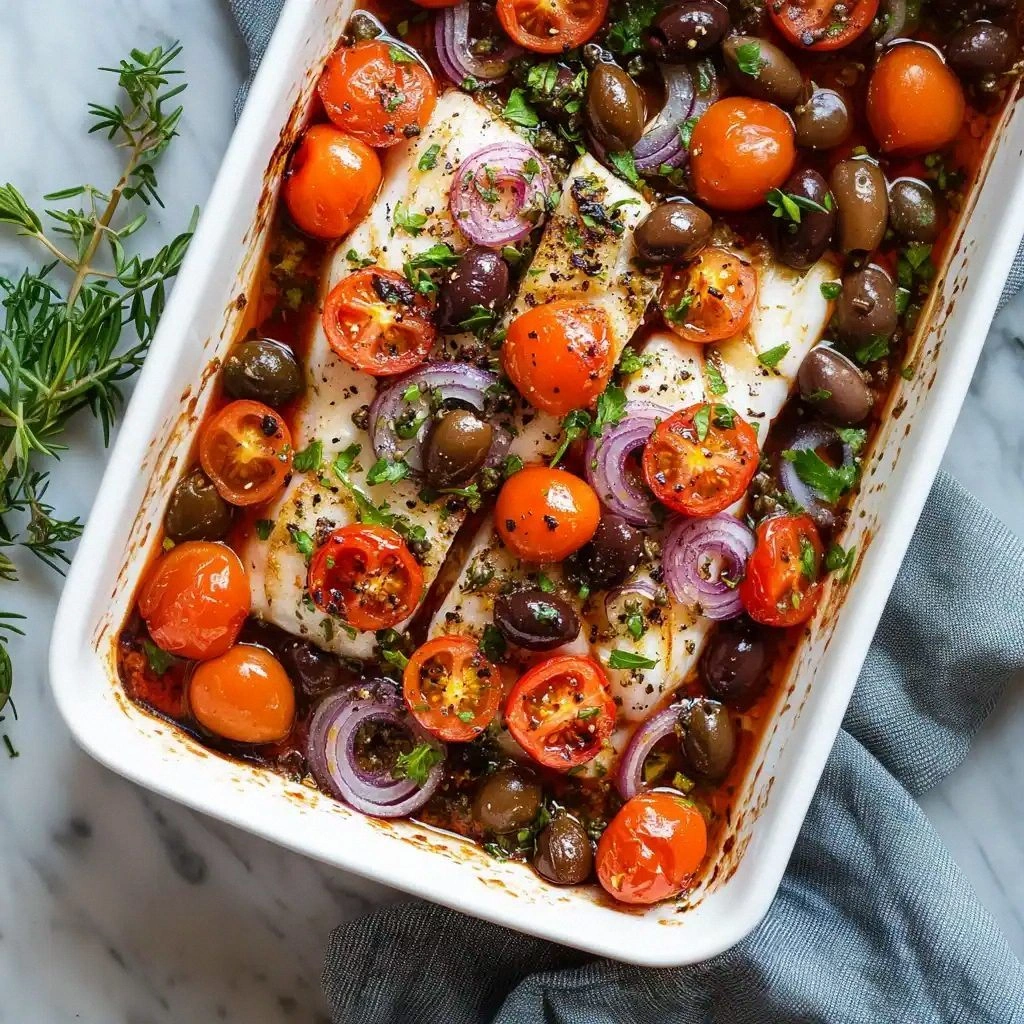
The Method — Step by Step
- Preheat your oven to 400°F (200°C). While the oven warms, pat the cod fillets dry with paper towels to ensure a crisp exterior. Season both sides with salt and pepper, then set aside. This simple step guarantees even seasoning and a beautiful crust.
- In a small bowl, whisk together olive oil, lemon juice, minced garlic, paprika, and dried oregano until well combined. The mixture should be smooth and fragrant. This will become the flavorful coating that infuses the fish.
- Heat a large oven‑proof skillet over medium‑high heat. Once hot, add the cod fillets skin‑side down. Sear for 2–3 minutes, or until the skin is golden and crisp. This step locks in moisture and creates a delightful crunch.
- Flip the fillets and pour the prepared sauce over them. Add cherry tomatoes, Kalamata olives, sliced red onion, and capers to the pan. The sauce should bubble gently, coating the fish and creating a vibrant, aromatic sauce.
- Transfer the skillet to the preheated oven. Bake for 12–15 minutes, or until the fish flakes easily with a fork and the sauce is bubbling. The interior should be opaque, signaling doneness.
- Remove the skillet from the oven and let the fillets rest for 2 minutes. Resting allows the juices to redistribute, keeping the fish moist. This small pause is critical for achieving that buttery texture.
- Sprinkle fresh parsley or basil over the fillets. The herbs add a bright, herbal note that lifts the dish. A final drizzle of olive oil gives the plate a glossy finish.
- Serve immediately with crusty bread or a simple side of quinoa. The bread will soak up the delicious sauce, making every bite a flavor explosion. The dish pairs beautifully with a chilled glass of white wine for a complete Mediterranean experience.
- That’s it — you did it. But hold on, I’ve got a few more tricks that will take this to another level. From finishing touches to plating ideas, these tips will ensure every bite is as memorable as the first.
Insider Tricks for Flawless Results
The Temperature Rule Nobody Follows
Many cooks swear by high‑heat searing, but the real trick is to use a moderate temperature that allows the fillets to cook evenly without burning. Setting the skillet to medium‑high and then reducing to medium during the final sear ensures the fish stays moist while still achieving that coveted crust. I once tried a 450°F sear and ended up with a scorched exterior and under‑cooked interior.
Why Your Nose Knows Best
The aroma of the sauce is a reliable indicator of doneness. As the tomatoes soften, the scent becomes rich and slightly sweet, signaling that the flavors are fully integrated. If you notice a sharp, metallic scent, the fish might be overcooked—time to pull it out.
The 5-Minute Rest That Changes Everything
Resting the fillets for just five minutes after baking allows the juices to redistribute throughout the fish. This small pause results in a more succulent bite and prevents the sauce from sliding off the plate. I’ve seen people skip this step, only to find their fish feels dry when cut.
Use a Skillet with a Lid
Covering the skillet during the oven bake traps steam, keeping the fish moist and the sauce thick. The lid also helps the tomatoes break down faster, creating a silky sauce that coats the fillets. If you don’t have a lid, a sheet of foil works as a suitable substitute.
Finish with a Splash of White Wine
Adding a splash of dry white wine during the final 5 minutes of baking deglazes the pan and infuses the sauce with subtle fruitiness. The wine’s acidity brightens the dish, while the alcohol evaporates, leaving only flavor. This trick is especially useful if you’re using less juicy tomatoes.
Creative Twists and Variations
This recipe is a playground. Here are some of my favorite ways to switch things up:
Spicy Mediterranean Cod
Add a pinch of red pepper flakes to the sauce for a subtle heat that complements the lemon. The warmth will add depth without overpowering the delicate fish. This version is perfect for those who love a bit of spice.
Herb‑Infused Cod
Swap oregano for fresh thyme and add a handful of fresh rosemary leaves. The earthy herbs will give the dish a different aromatic profile while maintaining the Mediterranean feel. This twist works well with a side of roasted vegetables.
Caprese Cod
Replace the capers with fresh mozzarella and basil leaves, then finish the dish with a drizzle of balsamic glaze. The creamy mozzarella adds richness, while the basil brings a sweet, peppery note. This variation transforms the dish into a fresh, Italian-inspired plate.
Greek Salad Cod
Serve the baked cod over a bed of diced cucumber, tomatoes, feta, and olives. Drizzle with extra‑virgin olive oil and a squeeze of lemon. This creates a complete meal that feels like a Greek salad with a protein boost.
Cod with Pesto Sauce
Swap the tomato‑olive sauce for a bright green basil pesto. The pesto adds a fresh, nutty flavor that pairs beautifully with the cod. Finish with a sprinkle of grated Parmesan for a touch of umami.
Quick Cod Skillet
For a faster version, cook the cod directly in the skillet with the sauce, eliminating the oven step. Sear the fillets, add the sauce, and cover for 8–10 minutes. This method is ideal for a quick weeknight dinner.
Storing and Bringing It Back to Life
Fridge Storage
Store any leftover cod in an airtight container in the refrigerator for up to 24 hours. The sauce will continue to meld with the fish, intensifying the flavors. When ready to eat, reheat gently in a skillet over low heat.
Freezer Friendly
For longer storage, freeze the cod with the sauce in a freezer‑safe container for up to 2 months. Thaw overnight in the refrigerator before reheating. The texture remains tender, and the sauce retains its vibrant flavor.
Best Reheating Method
Reheat the dish in a preheated oven at 350°F (175°C) for 10 minutes. Add a splash of water or broth to keep the fish moist, then cover with foil to trap steam. This method preserves the sauce’s consistency and ensures the cod stays juicy.