I was standing in my kitchen on a sweltering July afternoon, the kind of heat that makes the air feel like a thick syrup, when my neighbor knocked on the door with a half‑hearted challenge: “Make me a drink that screams summer, but don’t use the same boring wine‑and‑fruit combo everyone slaps together at backyard barbecues.” I laughed, grabbed a bottle of white wine that was still chilling in the fridge, and thought, I dare you to taste this and not go back for seconds. The result? A riotous, patriotic‑colored sangria that turned my tiny balcony into a Fourth of July fireworks show—without any actual fireworks.
Imagine the scene: the sun is low, casting a golden glow over the patio, a gentle breeze carries the faint scent of citrus, and you hear the soft clink of ice cubes as they tumble into a crystal pitcher. The first thing that hits you is the aroma—a bright, citrusy perfume that whispers of orange liqueur and fresh white peaches, mingling with the earthy sweetness of strawberries. You reach for a glass, the chilled liquid slides over your tongue like a silk scarf, and the flavor cascade hits you with the precision of a well‑timed drumroll: crisp white wine, juicy berries, a fizz that tickles your palate, and just enough sweetness to make you smile.
What makes this version stand out from the sea of sangria recipes that flood the internet? Most recipes get this completely wrong—they either drown the fruit in too much alcohol, or they forget the visual impact that makes a drink truly festive. I’ve taken the time to balance every element so that the colors stay vivid, the flavors stay layered, and the texture stays crisp. The secret? A splash of orange liqueur that lifts the whole thing, a dash of simple syrup that smooths the edges, and a final pour of sparkling water that turns the whole concoction into a lively, effervescent celebration.
But here’s the kicker: I’m going to throw in a technique that most home cooks overlook—pre‑macerating the fruit in a touch of sugar and liqueur for ten minutes before it meets the wine. This tiny step unlocks a depth of flavor that makes the sangria taste like it’s been steeping for hours, not minutes. Okay, ready for the game‑changer? Let me walk you through every single step — by the end, you’ll wonder how you ever made it any other way.
What Makes This Version Stand Out
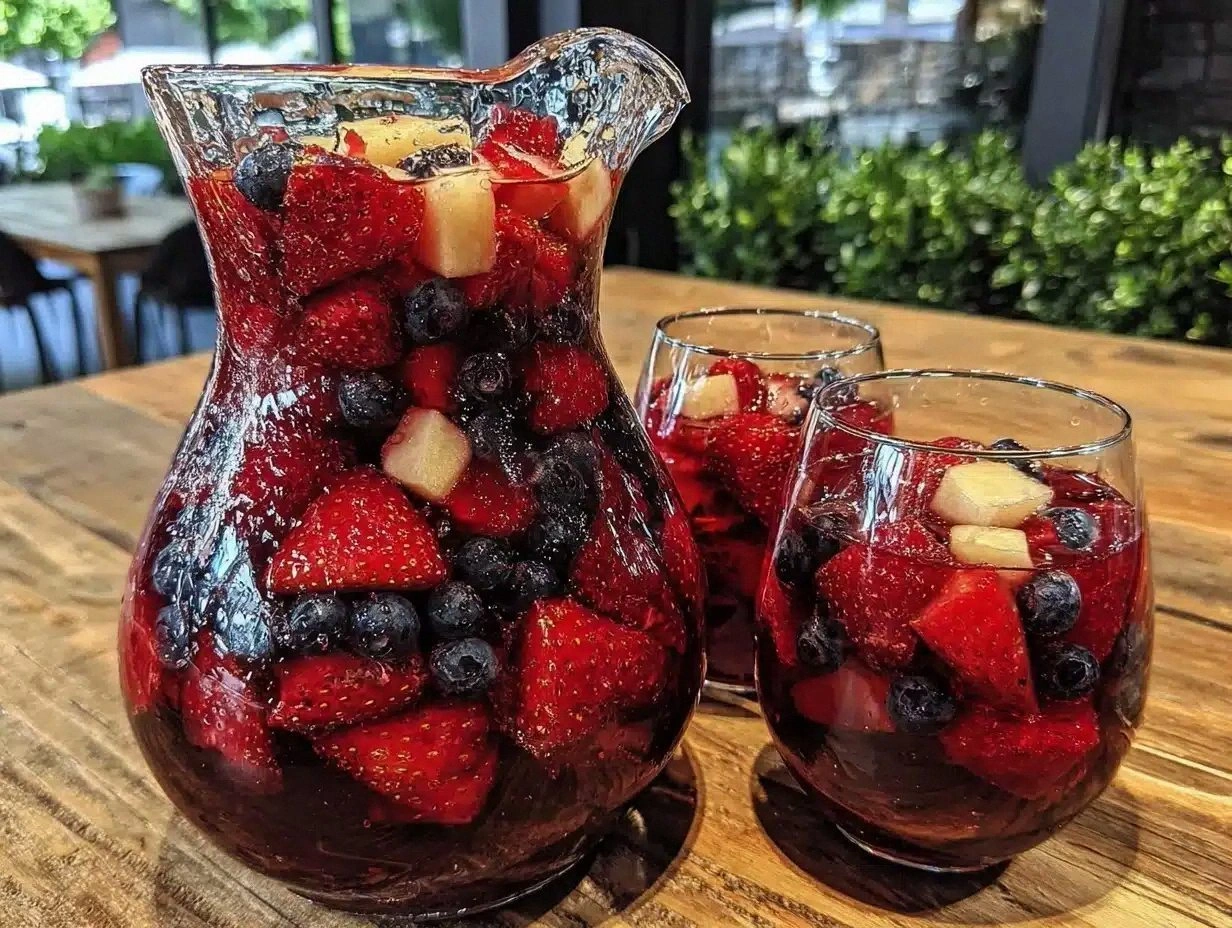
- Vibrant Palette: The red strawberries, blue blueberries, and pristine white peaches create a visual feast that screams celebration, perfect for any patriotic or summer gathering.
- Layered Sweetness: By balancing orange liqueur with a hint of simple syrup, the drink stays sweet without becoming cloying, letting the natural fruit flavors shine.
- Crisp Finish: The addition of sparkling water adds a lively fizz that lifts the wine’s weight, making each sip feel light and refreshing.
- Simple Prep: No complicated infusions or overnight chills—this sangria comes together in under fifteen minutes, then rests for a quick thirty‑minute mingle.
- Crowd‑Pleaser: Even the most skeptical wine‑averse friends will dive in for seconds, thanks to the approachable flavor profile and eye‑catching colors.
- Quality Ingredients: Using a crisp, dry white wine like Sauvignon Blanc ensures the base is clean, allowing the fruit and liqueur to take center stage.
- Make‑Ahead Friendly: The sangria can be assembled a few hours ahead, letting the flavors marry while you focus on other party prep.
- Versatile Base: Swap the wine for a sparkling rosé or a light Prosecco, and you’ve got a whole new spin without losing the core brilliance.
Inside the Ingredient List
The Flavor Base
The white wine is the backbone of this sangria. I recommend a crisp, dry Sauvignon Blanc or Pinot Grigio because their bright acidity cuts through the sweetness of the fruit and keeps the drink from feeling heavy. If you skip the wine, you’ll lose that elegant structure that lets the other flavors dance. A good tip: look for a bottle with citrus notes—think green apple and lemon zest—to echo the orange liqueur later on.
Orange liqueur (Grand Marnier or Triple Sec) adds a nuanced orange depth that you can’t get from fresh zest alone. It’s the secret that lifts the entire profile, turning a simple fruit punch into a sophisticated cocktail. If you’re out of liqueur, a splash of freshly squeezed orange juice plus a pinch of orange zest can mimic the aroma, though the alcohol kick will be missing.
The Texture Crew
Strawberries are sliced into thin rounds, providing a burst of ruby‑red color and a sweet‑tart bite. Their natural juices mingle with the wine, creating a fragrant infusion that’s impossible to resist. If you’re using frozen strawberries, let them thaw slightly so they don’t water down the sangria.
Blueberries bring the perfect pop of indigo and a subtle earthiness that balances the strawberries’ sweetness. They also add a delightful pop when you bite into them. If blueberries are out of season, blackberries work as a robust alternative, though they’ll add a deeper hue.
White peaches (or nectarines) are the “white” in our patriotic palette. Their delicate, floral flavor adds a lightness that prevents the drink from becoming overly sweet. Slice them thinly so they absorb the wine without turning mushy. If you can’t find white peaches, use ripe yellow peaches and a quick rinse of lemon juice to keep the color bright.
The Unexpected Star
Sparkling water is the fizz that turns a static sangria into a celebration in a glass. It lightens the mouthfeel and adds a playful effervescence that makes each sip feel like a tiny party. Use plain sparkling water for a clean finish, or opt for a lightly flavored lemon or lime version for an extra zing.
Simple syrup is optional, but a drizzle can balance the acidity of the wine and the tartness of the berries. I prefer a 1:1 sugar‑to‑water syrup because it dissolves instantly, ensuring no gritty sweetness. Honey or agave work too, but they’ll add their own flavor notes.
The Final Flourish
Ice isn’t just for keeping the drink cold; it also dilutes the sangria just enough to keep the flavors from becoming overpowering as the fruit continues to release juices. Fill the pitcher with a generous amount of ice right before serving, and you’ll maintain that refreshing chill throughout the party.
Everything's prepped? Good. Let's get into the real action...
The Method — Step by Step
Start by gathering your pitcher—choose a clear glass vessel so the colors can shine. Pour the entire bottle of crisp white wine into the pitcher, letting it cascade like a waterfall. As the wine settles, you’ll notice a faint citrus aroma that hints at the orange liqueur to come. Power transition: this is where the magic begins.
Add the orange liqueur and simple syrup (if using). Stir gently with a long spoon, watching the liquid swirl and turn a slightly amber hue. The scent now deepens, marrying the orange blossom notes with the wine’s crispness. I dare you to taste this and not go back for seconds.
Now, introduce the fruit. Toss in the sliced strawberries, blueberries, and white peach slices. Let them sit for about five minutes, allowing the fruit to macerate—this is the pre‑maceration step that unlocks hidden flavors. You’ll see the fruit start to bleed, tinting the wine with natural pigments.
While the fruit is soaking, grab a handful of ice and add it to the pitcher. The ice will chill the mixture instantly, and as it melts, it will gently dilute the alcohol, creating a balanced sip every time. Okay, ready for the game‑changer? Sprinkle a pinch of sea salt over the top; it amplifies the fruit’s sweetness without making it sugary.
Next, pour the sparkling water over the fruit‑laden wine. Do this slowly to preserve the fizz—think of it as coaxing a shy guest onto the dance floor. The drink should fizz audibly, a gentle hiss that signals the final layer of refreshment. Watch Out: If you add the sparkling water too early, the bubbles will dissipate during the maceration, leaving you with a flat sangria.
Let the sangria rest for at least 20‑30 minutes in the refrigerator. This resting period is crucial; it allows the flavors to meld, and the fruit to fully infuse the wine. During this time, the colors intensify, creating a visual masterpiece that looks like a miniature fireworks display in a glass.
When you’re ready to serve, give the pitcher a final gentle stir, then ladle the sangria into tall glasses, making sure each glass gets a generous handful of fruit. Add a fresh sprig of mint or a thin orange slice for garnish if you want an extra pop of color. This next part? Pure magic. The first sip should hit your palate with crisp acidity, juicy fruit, and a sparkling finish that makes you want to shout, “More, please!”
Finally, keep a pitcher of extra ice on hand for refills, and encourage guests to keep their glasses topped up. The drink stays lively for hours, and each refill feels as fresh as the first. And now the fun part. Watch your friends’ faces light up as they realize they’ve just discovered the best version of sangria they’ll ever taste at home.
That's it — you did it. But hold on, I've got a few more tricks that'll take this to another level...
Insider Tricks for Flawless Results
The Temperature Rule Nobody Follows
Never, ever use wine straight from a warm kitchen. Chill the bottle for at least two hours before you start. The cold temperature not only preserves the fizz when you add sparkling water, but it also slows down the extraction of bitter compounds from the fruit skins. I once tried a rushed version with room‑temperature wine and ended up with a flat, dull drink that tasted more like a wilted fruit salad than a celebration.
Why Your Nose Knows Best
Before you pour the wine into the pitcher, give it a quick sniff. If you detect any off‑notes—like a sour vinegar smell or a flat, wine‑y odor—discard it. The nose is the first line of defense against a bad batch, and trusting it saves you from serving a sub‑par sangria that could ruin the party mood.
The 5‑Minute Rest That Changes Everything
After adding the fruit, let the mixture sit uncovered for five minutes before sealing the pitcher. This brief rest allows the fruit’s natural sugars to dissolve into the wine, creating a smoother sweetness. A friend once skipped this pause and ended up with a sangria that tasted overly sharp, like a lemon that hadn’t been sweetened enough.
Garnish with Intent
A simple garnish can elevate the visual appeal and add a subtle aromatic layer. Try a thin orange wheel perched on the rim, or a few whole mint leaves floating among the berries. The garnish should complement, not overpower, the drink’s flavor profile.
Serve in the Right Glass
Tall, slender glasses keep the ice from melting too quickly and showcase the vibrant colors. If you’re serving a crowd, consider using clear plastic tumblers for outdoor safety, but still choose ones with a wide mouth to let the aromas escape.
Creative Twists and Variations
This recipe is a playground. Here are some of my favorite ways to switch things up:
Tropical Sunrise
Swap the white wine for a light, off‑dry Riesling and add a splash of pineapple juice. The result is a sun‑kissed sangria with a tropical twist that pairs beautifully with grilled shrimp.
Berry‑Bomb Blast
Replace the white peaches with sliced kiwi and add a handful of raspberries. The extra tartness balances the sweetness, creating a bold, ruby‑red concoction perfect for a brunch buffet.
Herbal Infusion
Add a few sprigs of fresh rosemary or basil during the maceration stage. The herbaceous notes give the sangria an earthy depth that works wonderfully with grilled chicken skewers.
Spiked Sparkler
For an adult‑only version, replace half of the sparkling water with chilled prosecco. The added bubbles and subtle grape notes turn the drink into a celebratory cocktail that feels extra fancy.
Non‑Alcoholic Delight
Swap the wine for a high‑quality white grape juice and replace the orange liqueur with a splash of orange zest‑infused water. You’ll still get the same vibrant colors and refreshing taste, making it perfect for kids or designated drivers.
Storing and Bringing It Back to Life
Fridge Storage
If you need to keep the sangria for later, transfer it to a sealed glass jar and store it in the refrigerator. It will stay fresh for up to 48 hours. Before serving again, give it a gentle stir and add a fresh splash of sparkling water to revive the fizz.
Freezer Friendly
You can freeze the fruit‑infused wine mixture (without the sparkling water) in ice‑cube trays. When you’re ready to serve, pop a few cubes into a pitcher, add fresh sparkling water, and you have an instant, chilled sangria that’s ready in minutes.
Best Reheating Method
If you find yourself with a slightly warm batch, place the pitcher in a shallow bowl of ice water for five minutes. This rapid chill method brings the temperature back down without diluting the flavors. Pro tip: add a tiny splash (about a tablespoon) of cold water before serving; it creates a gentle steam that revives the aromatic compounds.